Artist Statement

My paintings begin with the conviction that every surface carries a history. Whether I work on transparent plexiglass, over found images, or from photographic composites created from my own paintings, I am interested in transformation rather than representation. Each work develops through the accumulation of layers that conceal, reveal, and alter what came before.

House paint is central to this process. Chosen for its physical properties rather than its traditional association with fine art, it allows me to work with viscosity, gravity, transparency, and opacity in ways that encourage both intention and discovery. I guide each painting through successive decisions while remaining open to unexpected relationships that emerge through the material itself.

Painting on both sides of plexiglass has become an increasingly important part of my practice. The transparent support allows colour and form to exist in depth rather than on a single surface. Marks on the reverse interact with those on the front, creating shifting spatial relationships that change as the viewer moves around the work. In recent paintings I have sought a more distilled visual language, reducing the number of elements while allowing transparency, reflected light, and layered colour to carry more of the emotional and spatial weight. Rather than treating the support as a passive surface, I use its transparency as an active part of the painting.

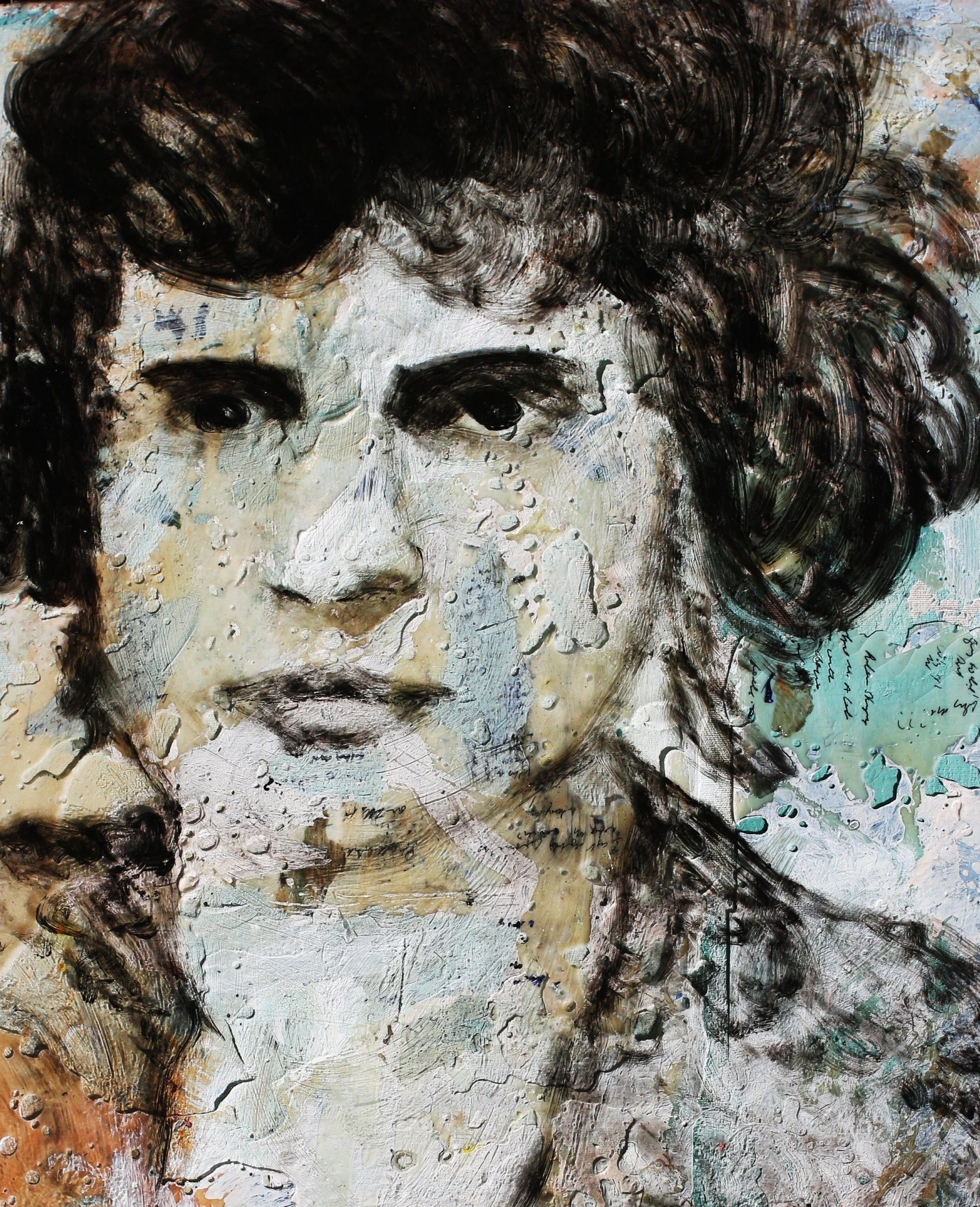
My portrait series, Talking to Strangers, explores these same concerns from a different direction. Rather than working from conventional photographic references, I begin with composite images created by combining photographs of my own paintings with photographs of my own abstract backgrounds. These self-generated source images become the point of departure for further transformation through paint, where successive layers obscure, reveal, and reshape the original composition. The resulting portraits exist somewhere between memory, abstraction, and observation, carrying traces of their own making.

My smaller works on found images continue this exploration of transformation in another form. Beginning with discarded pictures from thrift stores, I paint into and over existing images rather than erasing them completely. The history of the original picture remains embedded within the finished work, creating a dialogue between what was there and what has been added.

Across these different bodies of work, I am less interested in producing a fixed image than in creating paintings that continue to unfold through sustained looking. I hope the viewer experiences them not as illustrations of an idea but as places where material, process, and perception remain in active conversation.